

If a small business website does not attract consistent, qualified visitors, it becomes a digital brochure no one sees. Growing targeted website traffic means more leads, more sales, and more predictable revenue. The challenge for most small business owners isn’t just knowing what to do; it’s figuring out which tactics will actually work without draining limited budgets or requiring a full marketing team.
Unlike rented channels such as social media, a strong website becomes an asset that continues to bring in visitors long after the initial work is done. When you get more website traffic through strategic SEO, content marketing, and smart distribution, you’re building equity in your own platform rather than depending entirely on algorithms you can’t control. This matters especially for small businesses that need sustainable growth without constantly paying for every visitor.
For most small businesses, the goal is not “more traffic at any cost” but “the right traffic that is ready to engage or buy.” This guide will walk you through practical, proven strategies to increase website traffic from foundational SEO work to content creation, local search optimization, social media tactics, and paid advertising approaches that actually fit small business budgets.
Set Up Your Tracking and Measurement First
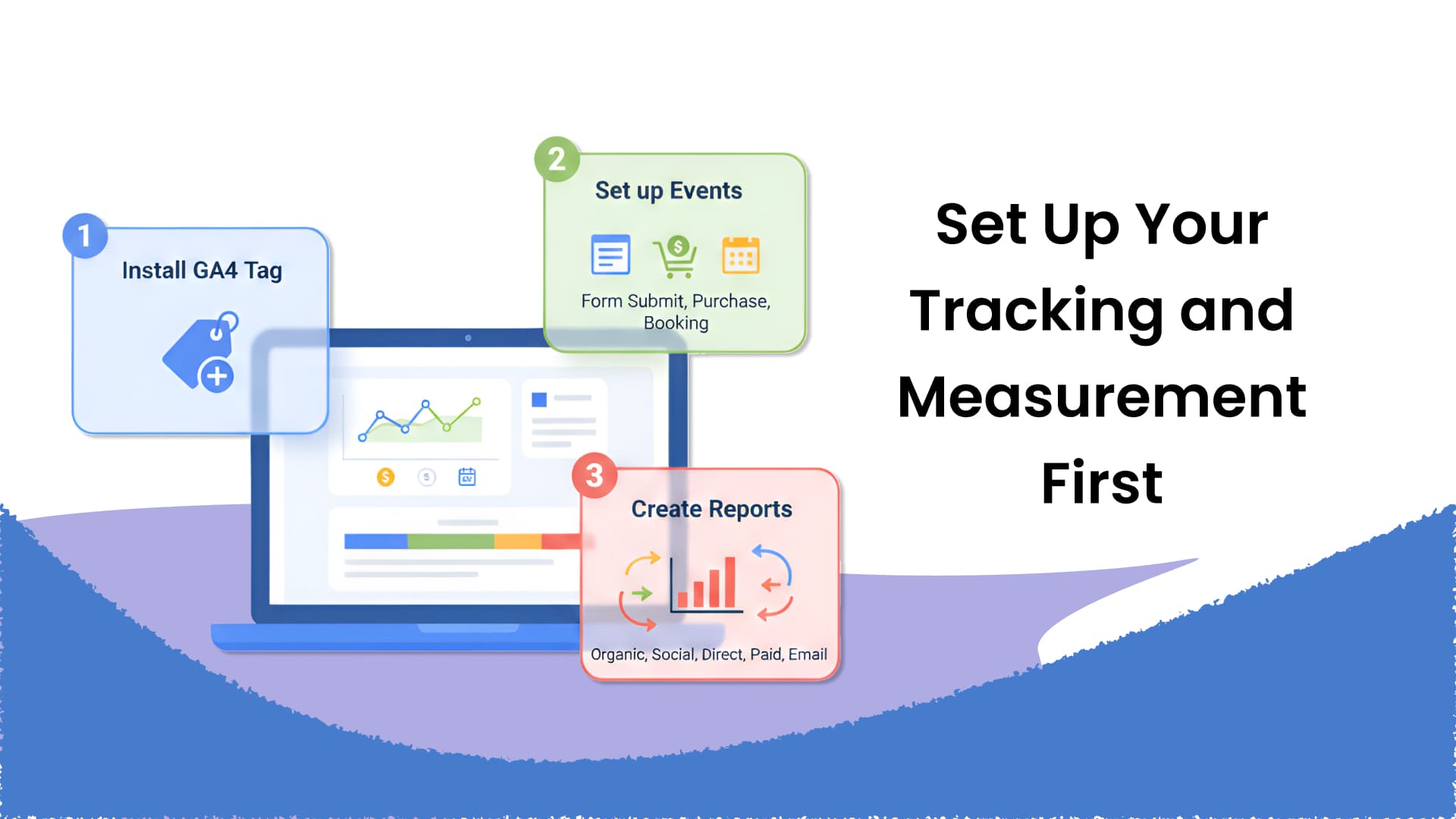
Before trying to get more website traffic for a small business, tracking must be in place. Otherwise, it is impossible to tell which tactics work and which waste time.
Configure Google Analytics 4
Use Google Analytics 4 (GA4) to track how many people visit the website, where they come from, and what they do on each page.
Key steps:
- Install the GA4 tag on every page (through your CMS, a plugin, or Google Tag Manager).
- Set up basic events such as contact form submissions, online purchases, or booking actions.
- Create simple reports focused on traffic sources (organic search, social, direct, paid, email).
Set Up Google Search Console
Google Search Console shows how the website performs in Google search.
Use it to:
- Submit a sitemap so Google can discover and index pages faster.
- See which keywords already bring in impressions and clicks.
- Identify issues like pages not indexed or mobile usability problems.
Define Clear Traffic Goals
Getting more website traffic for small businesses works best when there are specific goals.
Examples:
- Increase organic search traffic by 30% in 6 months.
- Grow traffic from local visitors in a specific city or region.
- Boost traffic to high-value pages (services pages, booking pages, product categories).
Build a Strong SEO Foundation
Search engine optimization (SEO) is the most reliable long-term way to get more traffic for a small business website. The idea is simple: match what your ideal customers search for and make the site the best result for those queries.
Understand Search Intent for Small Businesses
Search intent describes what people really want when they type a query.
Common intents for small business customers:
- Informational: “how to choose a landscaper near me”
- Commercial: “best accounting software for small business”
- Transactional: “book haircut in [city]”
When planning content, ask:
- What problem is the searcher trying to solve?
- What would they consider a complete, helpful answer on one page?
Do Practical Keyword Research
To get more website traffic for small businesses, focus on long-tail, low-competition keywords. These are more specific phrases with clearer intent.
Steps:
- Brainstorm the phrases real customers would use (not internal jargon).
- Use keyword tools (such as Google Keyword Planner, Ahrefs, or similar) to find:
- Long-tail keywords like “emergency plumber in [city]” instead of just “plumber.”
- Question-based queries like “how often should I service my HVAC system?”
- Group keywords by topic so you can create one strong page per main topic.
Optimize On-Page SEO for Each Page
On-page SEO helps search engines understand what each page is about.
Key elements:
- Title tag: Include the primary keyword naturally, such as “How to Get More Website Traffic for Small Businesses in 2025.”
- Meta description: Summarize the value and include the primary keyword once.
- H1: Use the main keyword once in the primary heading.
- H2/H3 headings: Include secondary keywords where relevant (e.g., “small business SEO tips,” “increase small business website traffic”).
- Body text: Use keywords naturally in context, not stuffed repeatedly.
- Image alt text: Describe the image and include a keyword when relevant, such as “small business website traffic analytics dashboard.”
Fix Technical SEO and Core Web Vitals
Technical SEO issues can hold back traffic even if content is strong.
Focus on:
- Site speed and Core Web Vitals: reduce image sizes, remove heavy scripts, and use caching.
- Mobile responsiveness: ensure the site looks and works well on phones.
- Clean URLs: use descriptive URLs instead of long, random strings.
- Internal links: connect related pages so visitors and search engines can navigate easily.
If technical SEO feels overwhelming, consider working with a full-service SEO agency that specializes in website optimization for small businesses. A provider such as SEOSkit.com offers services like technical SEO audits, on-page optimization, and content strategy through structured SEO packages tailored to small business needs and budgets.
Win in Local Search as a Small Business
Local SEO is often the fastest way to get targeted website traffic for small businesses that serve a specific area.
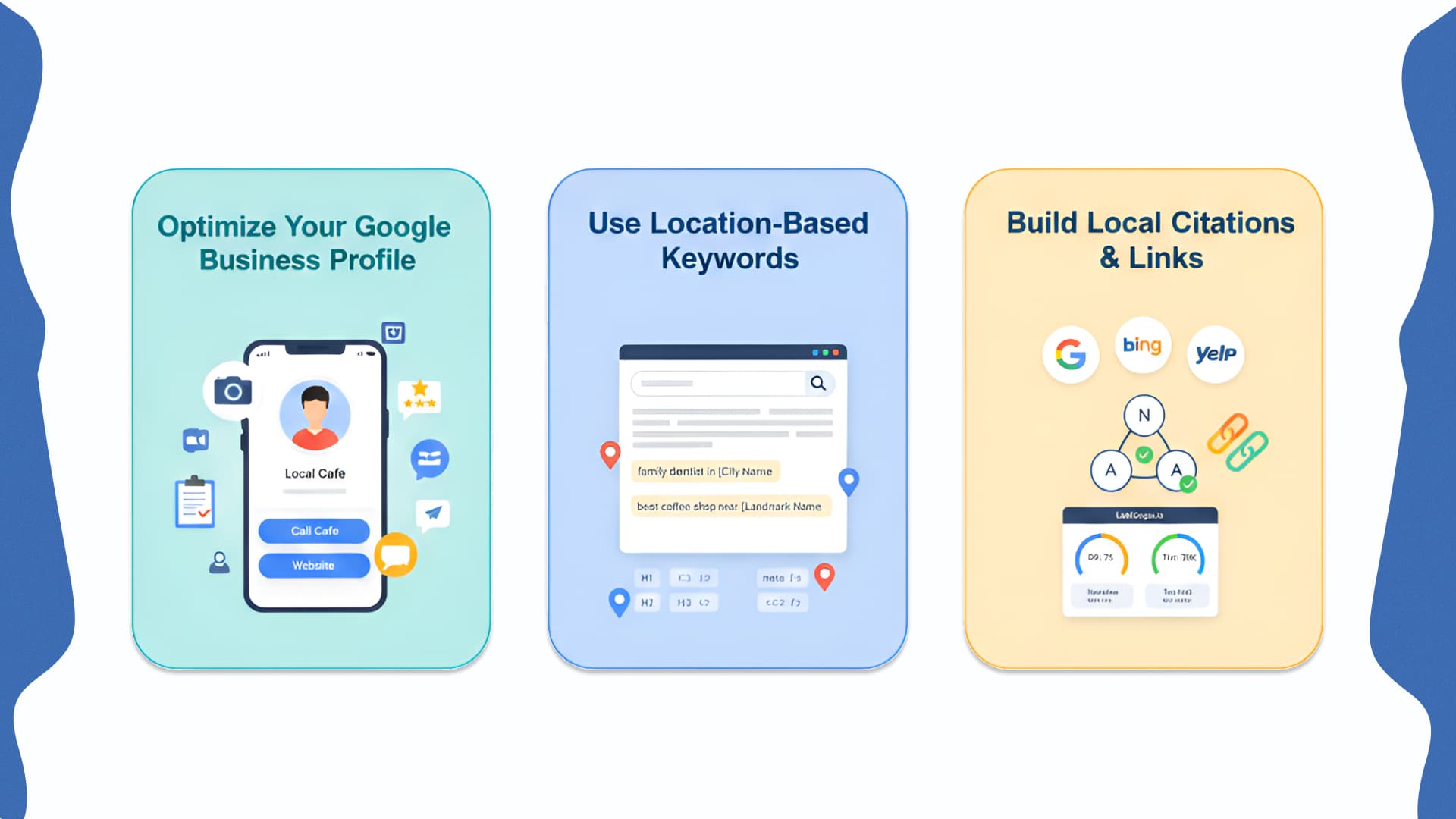
Optimize Your Google Business Profile
Many local customers will see your Google Business Profile before your website. It can drive calls, directions, and site visits.
Key steps:
- Fill out every field: business category, description, services, hours, and contact details.
- Add high-quality photos of your location, products, or team.
- Encourage happy customers to leave detailed reviews.
- Post updates, offers, and events regularly.
Use Location-Based Keywords on Your Site
To attract local visitors, weave geo-specific phrases into pages.
Examples:
- “family dentist in [city]”
- “best coffee shop near [landmark]”
Place these in:
- Page titles and meta descriptions.
- H1, H2, and H3 headings.
- Service descriptions and FAQs.
Build Local Citations and Links
Local citations and links help search engines trust your business information.
Steps:
- Claim listings on major directories (Google, Bing, Apple Maps, Yelp, local chambers).
- Ensure Name, Address, and Phone (NAP) are consistent everywhere.
- Partner with local organizations and events for mentions and links on their sites.
To scale link-building beyond local directories and partnerships, small businesses can use a backlink marketplace such as LinkScope.io, which allows you to buy backlinks and guest posts from a vetted network of sites with transparent metrics like domain rating and organic traffic. This can speed up authority growth while keeping control over relevance and quality.
Create Content That Attracts the Right Visitors
Content marketing is one of the most effective ways to get more website traffic for small businesses over time. The goal is to solve real problems for your audience better than competing pages.
Build a Simple Content Strategy for Small Businesses
You do not need a complex plan to start.
Follow this approach:
- Identify the top 3–5 problems your ideal customer faces.
- For each problem, plan one “pillar” article (in-depth, 1,500–2,500+ words).
- Support each pillar with smaller posts that answer specific questions.
For example, if you run a local gym:
- Pillar article: “Complete Guide to Getting Fit in [City] on a Busy Schedule.”
- Supporting posts: “Best Outdoor Workout Spots in [City],” “How Many Times Per Week Should You Train?”
Use Content Types That Work for Small Businesses
You can get more small business website traffic by mixing formats that match how people prefer to learn.
High-performing formats:
- How-to guides and tutorials.
- Step-by-step checklists and templates.
- Case studies and customer stories.
- Comparison posts (e.g., “X vs Y for [use case]”).
- FAQ posts addressing customer objections.
Repurpose Content Across Multiple Channels
Repurposing lets you reach more people without creating everything from scratch.
Example workflow:
- Start with a detailed blog post.
- Turn key points into short social posts.
- Record a short video summarizing the main steps.
- Use visuals or data to create a simple infographic.
- Add snippets to your email newsletter.
Improve User Experience to Turn Visitors Into Customers
Getting more traffic is only useful if visitors stay, explore, and eventually convert. User experience (UX) plays a big role in both rankings and revenue.
Make Your Site Fast and Easy to Use
Visitors leave quickly if pages load slowly or feel confusing.
Best practices:
- Aim for pages to load in under 3 seconds on mobile.
- Use clear navigation menus that highlight key pages (services, pricing, contact).
- Include visible calls-to-action on every important page (call, book, buy, request quote).
Structure Pages for Scanners
Most people scan before committing to reading.
To keep them:
- Use short paragraphs of 2–4 sentences.
- Add descriptive subheadings (H2/H3) that include relevant keywords.
- Use bullet points and numbered lists for steps and key points.
- Highlight important information (e.g., guarantees, benefits, timeframes).
Use Social Proof and Trust Signals
Trust is crucial for small businesses.
Add:
- Reviews and testimonials with names and locations, where possible.
- Case studies with clear before-and-after results.
- Trust badges (secure checkout, certifications, industry memberships).
Use Social Media to Drive Traffic Back to Your Site
Social media can be a major source of website traffic for small businesses if used strategically, not randomly.
Choose the Right Platforms for Your Business
Different platforms work better for different audiences.
Consider:
- Instagram and TikTok for visual, lifestyle, and product-focused businesses.
- Facebook for community-based and local businesses.
- LinkedIn for B2B services and professional offerings.
- YouTube for businesses that can educate through video.
Share Content That Leads Back to Your Website
Use social media as a distribution channel for your best content.
Ideas:
- Tease a blog post with a short summary and link to “read more.”
- Share before-and-after stories and direct users to detailed case studies on your site.
- Create short video clips that introduce a topic and link to the full guide.
Profile optimization matters too. If you want more clicks from social profiles, use strong bios, clear descriptions, and a single main link that points to either your homepage, a lead magnet, or a relevant landing page. For help crafting bios, channel names, and content ideas, you can use resources like SocialMelo.com, which offers Instagram bio ideas and social media content guides for creators and small businesses.
Build Social Proof and Momentum
Accounts with higher follower counts and engagement often gain more visibility, which can increase website clicks.
To build momentum:
- Post consistently instead of in bursts.
- Engage with comments and messages.
- Join conversations in relevant hashtags or communities.
Some small businesses also use social media growth services to accelerate early growth. Providers like SocialPlug.io offer targeted Instagram follower services, TikTok engagement packages, and YouTube subscriber growth. Used carefully and paired with strong content, this can help overcome the “cold start” problem and attract more organic visitors to your site from social profiles that look active and credible.
Grow Website Traffic with Email Marketing
Email marketing is one of the few channels a small business owns fully. It remains a powerful way to bring people back to the website.
Build an Email List with Relevant Offers
Offer something valuable enough that visitors want to subscribe.
Examples:
- Discount code for first-time customers.
- Free checklist, guide, or mini-course.
- Exclusive access to tips or news.
Place signup forms on:
- Homepage and blog pages.
- High-traffic content.
- Checkout or booking pages (with permission).
Use Email to Drive Repeat Visits
Once you have subscribers, send emails that give them reasons to return to your website.
Ideas:
- Weekly or monthly newsletters with links to your latest posts.
- Product updates or new service launches linking to detailed pages.
- Reminder campaigns for abandoned carts or incomplete bookings.
Use Paid Advertising for Quick, Targeted Traffic
SEO and content can take months. Paid advertising can start bringing visitors within days if done correctly.
Use Google Ads to Capture High-Intent Searches
Google Ads puts your business in front of people who are already searching for what you offer.
Tips:
- Focus on high-intent keywords such as “emergency [service] in [city]” instead of broad, vague terms.
- Use location targeting so ads show only where you actually serve customers.
- Send visitors to specific landing pages, not the homepage.
Use Facebook and Instagram Ads to Reach Ideal Customers
Social ads are useful for building awareness and retargeting visitors who have already interacted with your brand.
Best practices:
- Use interest and demographic targeting aligned with your buyer profile.
- Test different creatives and messages.
- Retarget site visitors and email subscribers.
Running ads at scale often requires more robust ad account infrastructure. Services like Uproas.io help small businesses access Facebook Business Manager accounts and Google Ads agency accounts for platforms such as Facebook, Google, and TikTok. These kinds of accounts can offer higher spending limits, better stability, and more control.
If an ad account is banned or restricted, professional Facebook unban services from a provider like Uproas.io can help restore access so campaigns can resume and traffic can start flowing again.
Build Authority Through Strategic Link Building and Partnerships
Backlinks links from other websites to yours remain a major factor in how high your pages rank. Higher rankings usually mean more traffic.
Use Guest Posting and Partnerships
Guest posting places your expertise on other relevant websites.
Steps:
- Identify blogs and industry sites your audience already reads.
- Pitch helpful, non-promotional content ideas.
- Include a link back to your site in the author bio or article where appropriate.
To simplify this, some small businesses use guest post placement services through platforms like LinkScope.io, which connect you with pre-vetted publishers and provide metrics such as domain rating, organic traffic, and niche fit. This approach saves time while still allowing you to build relevant authority links.
Use a Backlink Marketplace Strategically
If outreach is not realistic due to time constraints, a controlled backlink marketplace can help.
Best practices:
- Prioritize relevance and quality over sheer quantity.
- Look for sites with real organic traffic, not just inflated metrics.
- Diversify links across different pages and anchor texts.
Again, a marketplace like LinkScope.io gives small businesses a way to buy backlinks from vetted sites with transparent statistics, so you can grow domain authority and improve rankings more predictably.
Measure, Improve, and Stay Consistent
Getting more website traffic for small businesses is not a one-time task. It is an ongoing process of testing and refining.
Track the Right Metrics
Focus on:
- Overall traffic and traffic by channel (organic, social, paid, email, referral).
- Engagement metrics: bounce rate, time on site, pages per session.
- Conversion metrics: leads, bookings, sales, or other key actions.
Improve What Works and Cut What Doesn’t
Every month, review performance:
- Identify which blog posts attract the most visitors. Improve them with clearer CTAs, updated information, or better internal links.
- Evaluate which channels drive conversions, not just visitors.
- Pause or adjust campaigns that cost more than they return.
Final Thoughts
To get more website traffic for small businesses, think in systems, not hacks. Put tracking in place, build an SEO foundation, publish helpful content, use social media and email to bring people back, and support everything with smart paid campaigns and link building.
Pick two or three strategies from this guide, implement them consistently for 90 days, and then use real data to decide what to double down on next.
Also Read-4 Reasons CPAs Are The Backbone Of Business Expansion
