

Many international HR professionals planning to attend conferences in Canada often ask, can you use a tourist visa to attend an HR conference in Canada? Canada does not issue a visa specifically for conferences, which creates confusion about whether a tourist visa, business visa, or another entry document is required.
In reality, your eligibility depends on two things: your citizenship (visa-required, visa-exempt, or U.S.) and what you will actually do at the conference. Most HR professionals attend as visitors, using a Temporary Resident Visa (TRV), an Electronic Travel Authorization (eTA), or simply a passport for U.S. citizens. Your entry status is often considered Business Visitor, even if that wording does not appear on your visa.
How Canada Classifies HR Conference Attendance?
Canadian immigration classifies conference travel based on activities, not the title of the event. Most HR conferences are short-term professional gatherings focused on learning, discussion, and networking. If you’re not entering the Canadian labor market or being paid by a Canadian entity for work performed in Canada, you are typically admissible as a visitor.
Key Classification Principles
- Conference attendance is usually a visitor activity
- Learning, networking, and knowledge-sharing are allowed
- You must not provide services that directly benefit a Canadian employer in a “work” sense
- You must not receive Canadian-source compensation for work (beyond allowable reimbursements)
Business Visitor Status: What It Means (And Why People Get Confused)
A major misconception is thinking that “Business Visitor Visa” is a separate visa sticker. In Canada, Business Visitor is usually a status/purpose of entry, not always a separate document.
- Visa-required travelers apply for a Temporary Resident Visa (TRV) and declare their purpose as conference attendance or business visitor activity.
- Visa-exempt travelers typically enter using an eTA when arriving by air, while still being admitted as visitors for business-related purposes.
- U.S. citizens usually enter Canada with a valid passport only and are admitted as visitors for conference attendance.
In short, the document differs by passport, but the visitor rules and the allowed activities are what officers enforce.
Who Needs What to Attend an HR Conference in Canada?
This section is essential for accuracy and for Google snippet capture.
Canada HR Conference Entry Document Checklist
| Traveler type | What you need | Typical examples |
| U.S. citizens | Passport only | United States |
| Visa-exempt nationals | eTA (CAD $7) if flying | UK, France, Germany, Australia, Japan, South Korea |
| Visa-required nationals | TRV (Visitor Visa) | India, China, Pakistan, Philippines, Nigeria, Bangladesh |
Important note: Visa-exempt travelers arriving by air generally need an eTA. Arriving by land may not require an eTA, but you still must meet visitor rules.
What You Can Do as a Visitor at an HR Conference
If your role is passive or educational, you’re usually fine.
Allowed Activities
- Attend conference sessions, panels, and keynotes
- Join workshops as a participant/learner
- Network with HR professionals and vendors
- Visit exhibitor booths and learn about services/products
- Observe Canadian HR practices and trends
- Attend social networking events tied to the conference
Many international delegates attend a well-organized HR conference in Canada specifically for learning and professional exposure, which fits squarely within visitor rules.
The “Work” Gray Area: Speakers, Panelists, Trainers
This is one of the biggest real-world pain points for HR professionals.
If You Are a Speaker:
You may be allowed to speak as a Business Visitor if:
- You are not being paid by a Canadian organizer/employer for the speaking activity, and
- Any payment is limited to expense reimbursement (travel, hotel, meals) or very limited allowances that do not amount to wages.
You may need a different authorization (sometimes a work permit) if:
- You are receiving a speaker fee, honorarium, or wage from a Canadian source, or
- You are delivering structured training/consulting services for Canadian clients, or
- Your activity resembles doing a job in Canada rather than attending an event.
Practical rule: If you’ll be paid by a Canadian entity for what you do in Canada, treat it as a red flag and review work permit requirements before travel.
What You Cannot Do on Visitor Status
Crossing these boundaries can lead to refusal at entry or future issues.
Restricted / Not Allowed
- Delivering paid HR training in Canada for Canadian clients
- Consulting or performing HR services for a Canadian organization during your stay
- Taking a role that looks like employment in Canada
- Signing/starting a Canadian employment contract and beginning work immediately
- Receiving Canadian-source compensation for work performed in Canada (without proper authorization)
Biometrics Requirements
If you are applying for a TRV, biometrics are now a standard part of many applications.
What This Means in Practice
- Many visa-required applicants must provide fingerprints and a photo after applying for a TRV.
- Biometrics are typically completed at a Visa Application Centre (VAC).
- This adds time and logistics to the process, so apply early.
If you are visa-exempt (eTA) or a U.S. citizen, biometrics are generally not part of the entry for conference attendance.
Family Members: Can Your Spouse or Children Come With You?
Yes, in most cases, accompanying family members can travel under the same visitor rules appropriate for their citizenship.
Typical family scenarios
- Your spouse/partner and children can come as tourists/visitors
- They need their own entry document depending on their passport:
- U.S. citizen family: passport only
- Visa-exempt family: eTA if flying
- Visa-required family: TRV (and biometrics if applicable)
Important: Your family members should not claim they’re “working” either. Their purpose should be tourism/visiting, while yours is conference attendance.
Documents to Carry for a Smooth Border Experience
Border officers don’t just check your visa or eTA; they check credibility and intent.
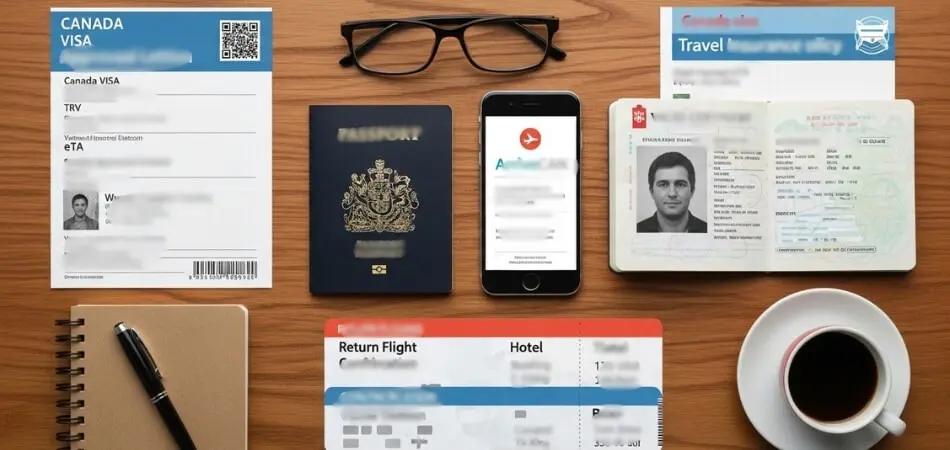
Recommended Documents
- Conference invitation letter (official)
- Conference registration confirmation/receipt
- Event agenda/program schedule
- Hotel booking/accommodation proof
- Return flight ticket
- Proof of funds (bank statement, card limits, employer support letter if applicable)
- Proof of ties to home country (employment letter, leave approval, business ownership, etc.)
IRCC Special Event Code
Some legitimate conferences register with Canadian immigration and may provide an IRCC Special Event Code.
Why it matters
- It helps border officers quickly verify the event and its legitimacy.
- It can reduce confusion during questioning.
- It strengthens your documentation package.
Tip: Ask the organizer whether your invitation letter includes an IRCC Special Event Code, and carry it with you if available.
How Border Officers Assess HR Conference Travelers?
Officers focus on intent and compliance, not the conference name.
What Officers Evaluate
- Why you’re coming (conference vs work)
- How long you’ll stay
- Who is paying for the trip
- Whether you will be compensated in Canada
- Whether you will return home (ties to home country)
- Whether your documents match your story
Common Mistakes HR Professionals Make
Most refusals happen due to avoidable communication mistakes.
Mistakes to Avoid
- Saying “I’m going to work at a conference” instead of “attend”
- Not clarifying whether you are a paid or unpaid speaker
- Carrying inconsistent documentation (dates, hotels, funding proof)
- Overstaying or changing plans without extending status
Choosing the Right HR Conference in Canada
A credible event makes your travel purpose easy to justify. To plan early, many delegates look at upcoming HR conferences in Canada (ideal anchor text for internal linking), compare agendas, and ensure organizers can issue a proper invitation letter.
What makes a conference visitor-friendly
- Transparent organizer details and contact information
- Clear agenda and session descriptions
- Defined participant roles (delegate vs speaker vs exhibitor)
- Legitimate venue and registration structure
- Ability to issue an official invitation letter for delegates (ideal anchor text for internal linking)
What to Say at the Border: Clear, Safe Wording
Your explanation should be short and consistent.
Best Way to Explain Your Purpose
- “I’m attending an HR conference in Canada as a delegate.”
- “My activities are attending sessions and networking.”
- “I will not be working for a Canadian employer.”
- “I’m staying for X days and returning on (date).”
Avoid vague statements like “business stuff” or “work meetings” unless you can explain them clearly.
Conclusion
For most delegates, the answer to can you use a tourist visa to attend an hr conference in Canada comes down to two things: your entry document (TRV, eTA, or U.S. passport) and what you will actually do at the event. If your role is limited to learning, attending sessions, and networking, visitor entry is usually appropriate.
The main risk comes when your conference role starts to look like work, such as paid speaking, delivering training, consulting, or receiving Canadian-source payment beyond basic expense coverage. With early planning, biometrics awareness (if applying for a TRV), and strong supporting documents like a proper invitation letter (and an IRCC special event code if provided), you can keep your trip clear, compliant, and smooth.
