
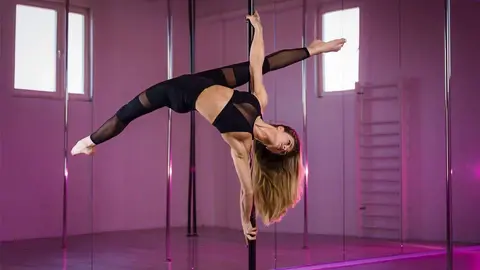
Starting pole dance is always a mix of excitement and confusion, especially when it comes to choosing the right clothing. The first thing beginners usually notice is that typical gym wear doesn’t work well for training. Pole requires proper grip, freedom of movement, and confidence in every position, so understanding how to dress is part of the learning process. Comfortable and functional clothing helps avoid unnecessary slips, protects the skin when needed, and gives the support your body requires while adapting to new loads. For this reason many newcomers spend time testing various outfits before selecting the right set.
One of the most important principles is to keep the skin open in the areas that actively contact the pole. Shorts with a higher cut or flexible training bottoms that allow movement without restriction are the most common choice. Tight leggings can be used only at the earliest warm-up stages, but they reduce grip during spins or climbs. Tops should fit tightly without shifting during transitions, especially when training inverted positions. Avoid loose waistbands or wide straps because they tend to slide and distract you while you learn to stabilize your core. Another detail beginners often underestimate is fabric quality. Cheap synthetics can cause irritation, excessive sweating, or slipping. It is better to look for breathable, elastic materials that maintain shape after dozens of training sessions. Durable seams also matter because pole movement often creates pressure on the clothing edge. A reliable set gives stability when practicing new tricks, and this is especially important during the first months of training.
Queenwear
When searching for beginner-friendly pole wear, pay attention to brands that specialize in pole dance apparel rather than generic sports clothing. Specialized designers understand how pieces behave under intense stretching and fast transitions. This is why many beginners choose curated outfits from stores like the performance-ready collections at QUEENwearofficial, which integrate grip-friendly fabrics with supportive cuts tailored for pole movement. Color and style may seem like secondary details, but they influence confidence. Many performers prefer brighter tones or designs that visually emphasize body lines, as this helps track movement execution in the mirror. However, beginners sometimes feel more comfortable in neutral colors before switching to bolder looks. Both choices are valid. What truly matters is how you feel wearing the outfit and whether it supports your movement flow.
Before creating your complete training wardrobe it also helps to consult your trainer. They can recommend specific lengths, cuts, or materials based on the pole style you practice. Exotic, sport, and contemporary pole may require different combinations of coverage and flexibility. Some studios also have rules regarding footwear, knee pads, or layering during choreography sessions. Using this guidance saves money because you avoid buying unnecessary or unsuitable items at the beginning.
As you build consistency, you will naturally refine your preferences. Some dancers switch from high-waisted shorts to minimalist models for better grip on thighs or hips. Others experiment with crop tops, supportive sports bras, or outfits with enhanced stretch for advanced elements. Over time clothing becomes part of your identity on the pole rather than just a functional necessity.
Also Read-How Live Dealer Casino Software Works: Tech Behind the Tables
