
Growth Without Chaos: Building a Digital Infrastructure That Expands With Your Vision
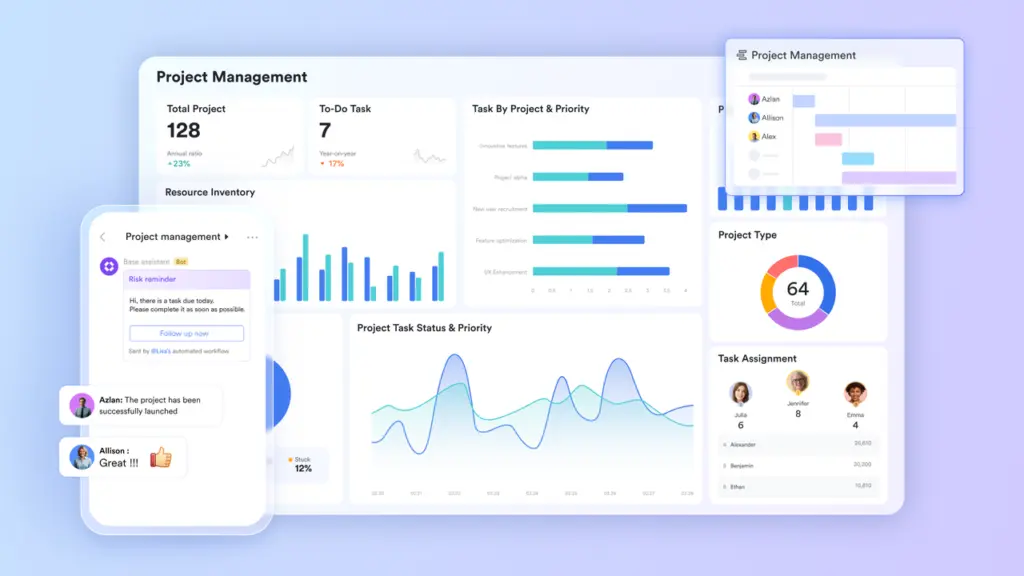
Most companies build their digital infrastructure reactively. A problem appears, a tool gets added, and over time the workspace becomes a patchwork of solutions that were each reasonable in isolation but have never been designed to work together. By the time the company reaches meaningful scale, the infrastructure is already a liability. The teams spending the most time managing the complexity of their own tooling are the ones growing the slowest, because operational overhead compounds exactly as fast as headcount does. The answer is not a better tool for each problem. It is a set of project management tools built to handle growing complexity within a single environment.
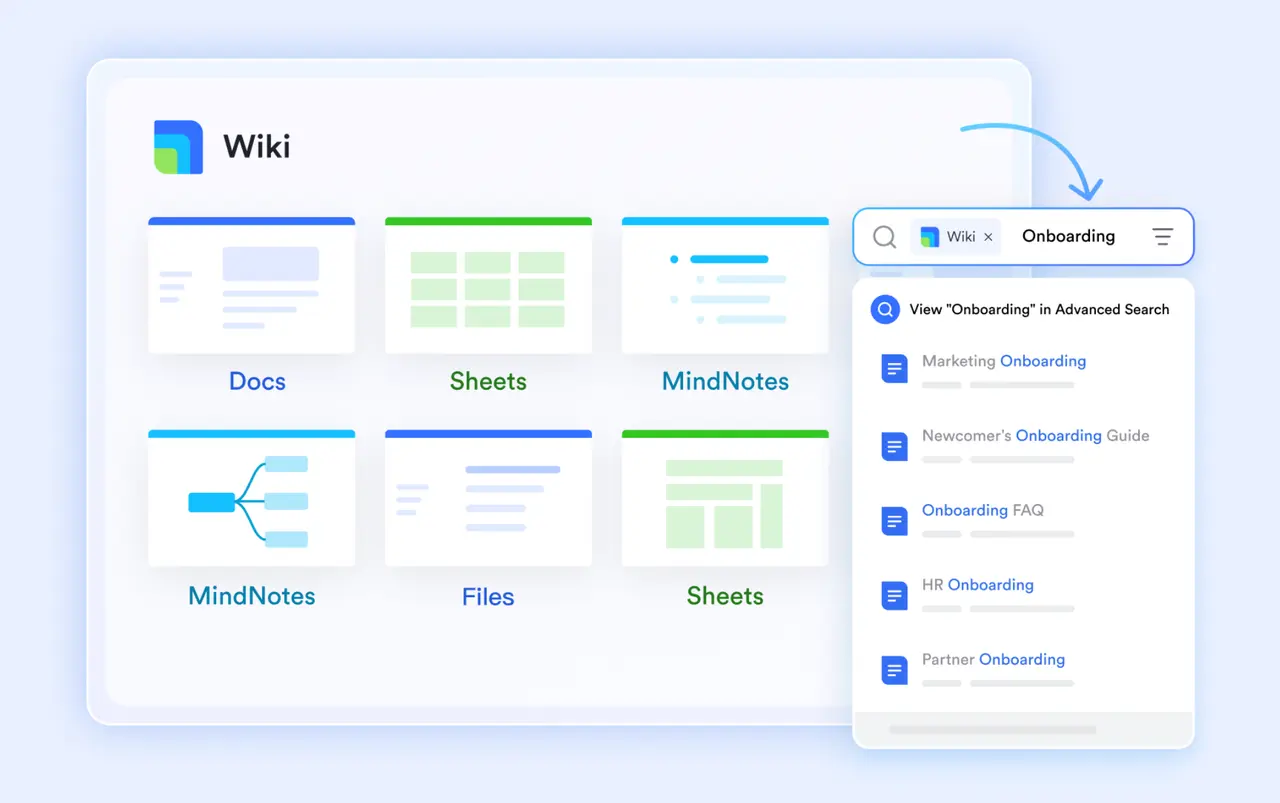
Structuring knowledge so it grows without becoming a maze with Lark Wiki
-
Nested page hierarchies for scalable organization. Lark Wiki supports multi-level page structures that can be shaped around how the company actually works: by department, by product line, by geography, or by process. As new teams and functions are added, they slot into the existing structure rather than creating a parallel, unconnected knowledge base.
-
“Rich Content” that keeps documentation alive. Wiki pages can contain embedded spreadsheets, databases, and mindmaps alongside text, so the knowledge base is not a static archive of written notes but a living operational reference. A process page can include the live Base table it describes rather than linking out to a separate tool.
-
Sidebar access from anywhere in the workspace. Team members can open the Wiki knowledge base from a sidebar panel without leaving their current document, spreadsheet, or meeting, so finding the right information never requires a context switch.
Keeping decisions moving without creating bottlenecks with Lark Approval
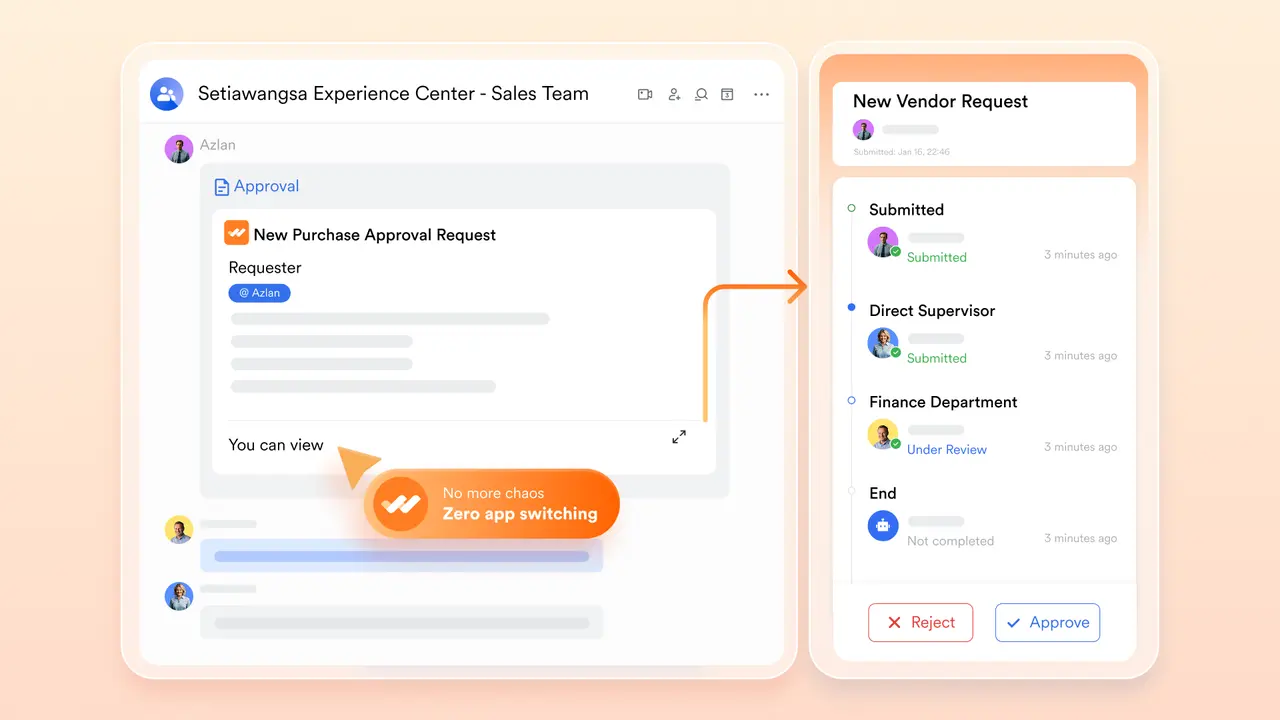
- “Conditional Branches” for policy-driven routing. Approval workflows can be configured to route requests to different approvers based on the request’s characteristics, such as budget value, department, or risk category. A purchase request above a defined threshold goes to a senior approver automatically, without anyone having to manually redirect it.
-
Parallel routing for time-sensitive decisions. Multiple approvers can review the same request simultaneously rather than waiting in a sequential queue. For decisions that require sign-off from legal, finance, and operations, this alone can cut approval time from days to hours.
-
Full audit trail for every decision. Every approval action, including who reviewed what and when, is logged automatically. Growing companies preparing for compliance reviews or investor due diligence have a complete, timestamped record without building a separate tracking system.
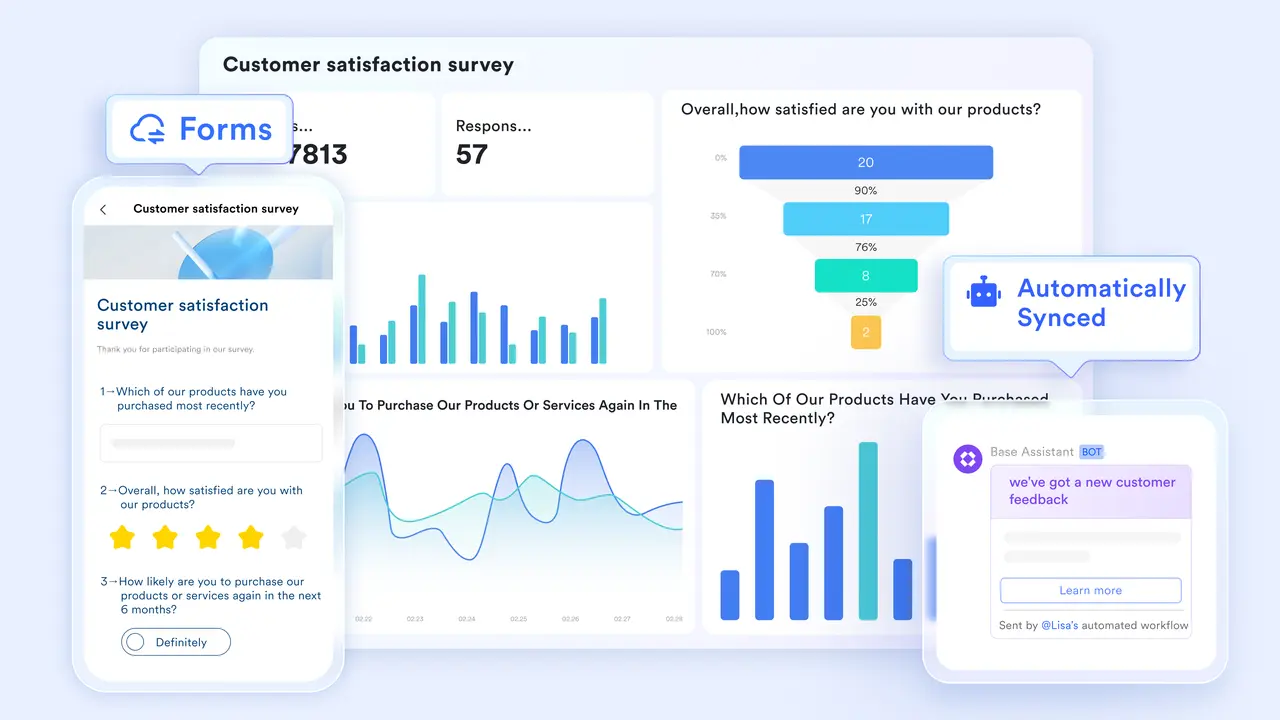
Replacing unstructured inbound requests with structured data with Lark Forms
-
Conditional logic for intelligent intake. Lark Forms can show or hide fields based on previous answers, so a single form handles multiple request types without creating a confusing experience for the submitter. Each submission arrives with exactly the fields filled that the processing team needs.
-
Direct pipeline into Lark Base. Every form submission maps automatically to a corresponding record in a Base table, so incoming requests, registrations, or reports are immediately actionable as structured database entries rather than emails that need manual processing.
-
Shareable by link with no account required. External parties can submit forms without joining Lark, making the tool equally useful for internal operations and for collecting information from vendors, applicants, or customers.
Running large-group collaboration without losing quality with Lark Meetings
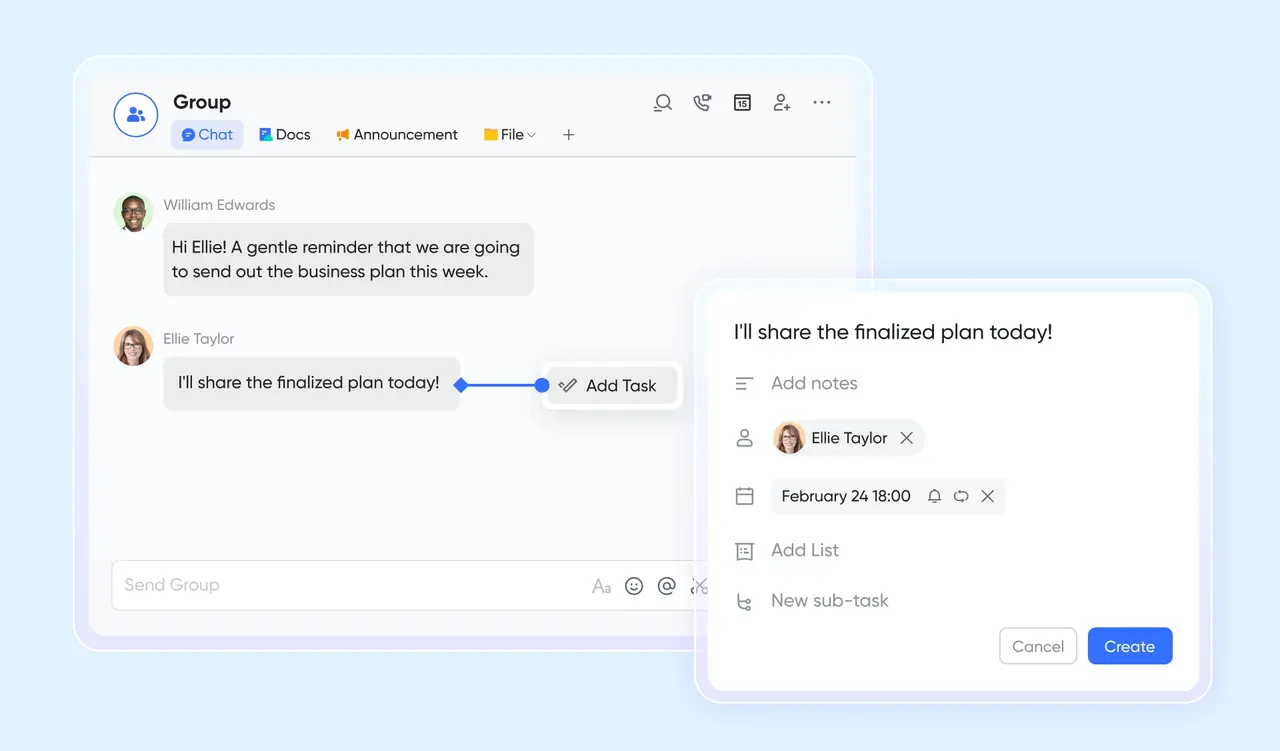
As companies grow, the nature of their meetings changes. All-hands sessions, cross-functional workshops, and training events require a different infrastructure than the one-on-one calls and small team syncs that worked at early stage. Lark Meetings is built to handle that range without requiring a separate enterprise conferencing platform.
“Group Meetings” supports up to 1,000 participants in a single session, with up to 50 breakout rooms available for parallel small-group discussions within the same call. A company all-hands can include the whole organization, then break into departmental groups for Q&A, then reconvene, all without leaving the meeting or switching to a separate tool. The scale of the infrastructure matches the scale of the organization rather than creating a ceiling that forces a migration when the team outgrows it.
Keeping financial and operational data clean as the business expands with Lark Sheets
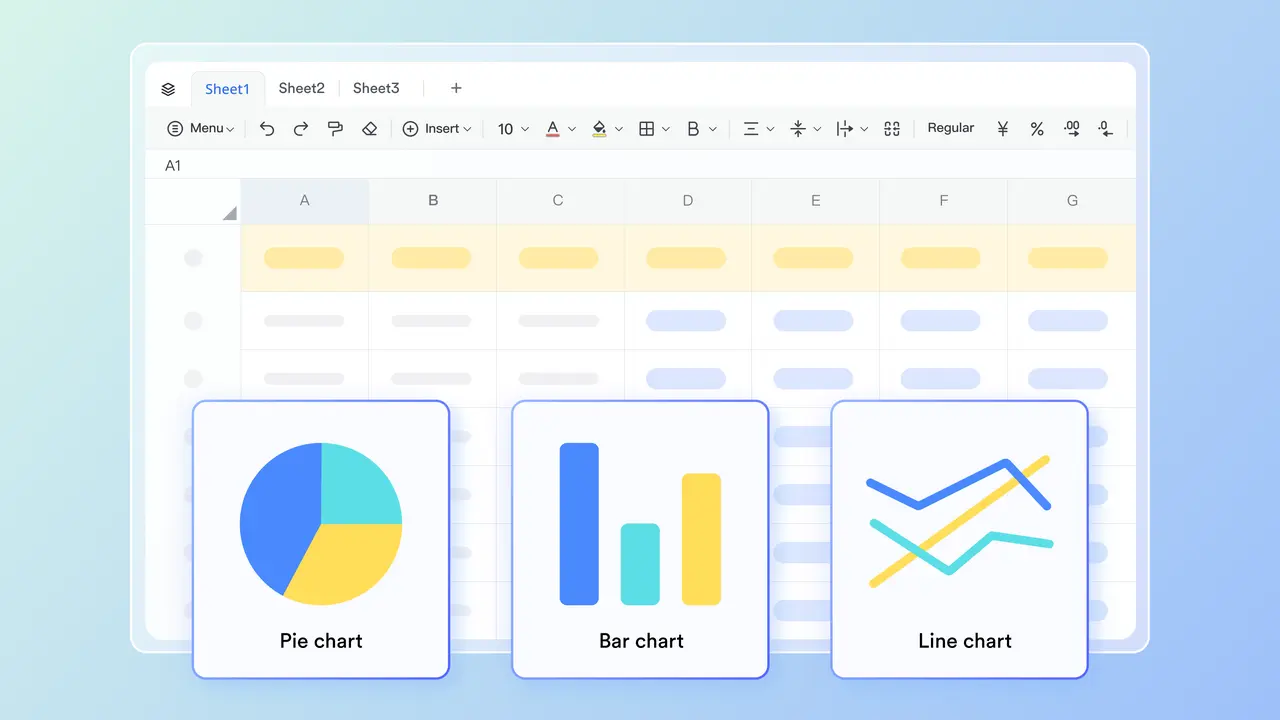
- Cross-sheet formula references for connected reporting. Lark Sheets allows teams to build calculation layers that draw from multiple source sheets simultaneously, so updating a single data source cascades through every dependent report automatically. Financial models, operational dashboards, and capacity plans all stay current without manual reconciliation.
-
Range-level sharing for data governance. Administrators can share specific columns, rows, or ranges of a Sheets file with different team members rather than sharing the whole document. Sensitive financial data stays protected while the relevant subset remains accessible to those who need it.
-
Linked charts in Lark Slides for self-updating presentations. Charts built in Lark Sheets can be embedded in Lark Slides so that presentations update automatically when the source data changes, removing the pre-meeting rebuild cycle that consumes significant time at growing companies.
Bonus: Infrastructure that compounds versus infrastructure that constrains
The benchmark most growth-stage companies use when evaluating their digital stack is Google Workspace pricing and similar foundational platforms. That is a reasonable starting point, but it captures only the base cost. The more important question is how much operational overhead the chosen infrastructure will generate as the company scales, and how much of that overhead will eventually require additional headcount to manage.
Infrastructure that compounds in value as the team grows is infrastructure where every new user strengthens the system: more data in Base means better reporting, more pages in Wiki means a richer knowledge base, more approvals in Approval means a clearer audit trail. Infrastructure that constrains generates the opposite effect: more users in disconnected tools means more data fragmentation, more manual reconciliation, and more people hired specifically to manage the friction between systems.
Lark is designed to compound. Every part of the platform feeds the others, so the operational value of the system grows with the team rather than plateauing at a threshold the early tooling wasn’t built to cross.
Conclusion
Building digital infrastructure that expands with your vision means making decisions now that will still be right when the company is three times its current size. That means choosing a platform where knowledge, workflows, communication, and data live together rather than in parallel systems that require constant human maintenance to stay synchronized. A unified set of productivity tools is not a productivity choice. It is a growth strategy.
Also Read